

 By Admin |
  September 01, 2026
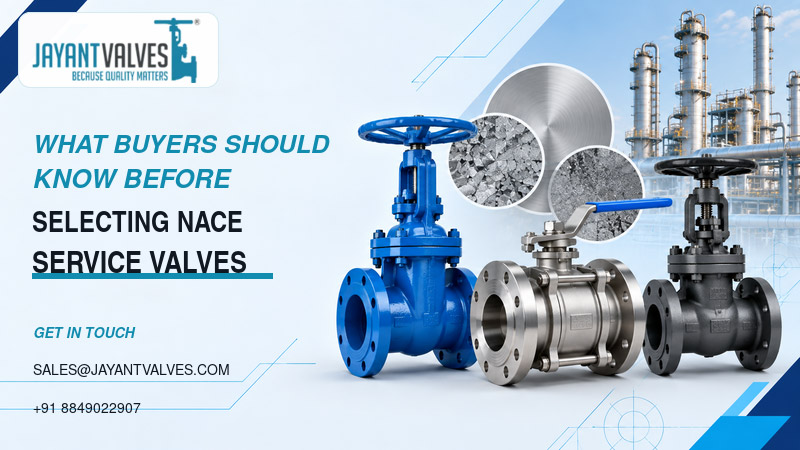
Industrial valves used in oil and gas, refinery and petrochemical applications often operate under demanding process conditions. In such environments, the valve material needs to be suitable for the service rather than being selected only on the basis of size, pressure class or connection type. A valve that works well in one application may not be suitable for another, making proper material and specification review an important part of the purchasing process.
For applications involving specific corrosive or challenging service conditions, material requirements provide an important point of consideration. Buyers who understand these requirements can communicate their project needs more clearly and select valves that are better suited to the intended service.
NACE service valves are industrial valves selected or manufactured for applications where specific material requirements need to be considered. NACE is not a separate valve design. Instead, it refers to requirements that help address material suitability for certain service environments.
The valve itself can be a gate valve, globe valve, ball valve or check valve. The right option depends on the job. A gate valve is generally used for isolation, while a globe valve may be selected when flow control is required. Check valves help prevent unwanted reverse flow, while ball valves are commonly used for quick shut-off.
Industrial valves can come into direct contact with process fluids for long periods. In some environments, unsuitable materials may be more vulnerable to corrosion or cracking. Over time, this can affect valve performance and create maintenance concerns.
These requirements encourage buyers and engineers to pay closer attention to material suitability. Instead of choosing a valve only by size or pressure class, the complete operating environment should be considered.
The process fluid, pressure, temperature and service conditions can all influence the final material and valve selection. This makes it important to discuss the actual application before placing an order.
Material requirements can apply to different industrial valve designs. The choice mainly depends on the function required within the piping system.
Gate valves are commonly used to shut off process lines and are generally preferred where full flow is required during operation. Globe valves are suitable for applications where flow needs to be regulated. Ball valves offer quick operation and are often used for isolation.
Check valves perform a different function by allowing flow in one direction while helping prevent unwanted backflow. Selecting the right design requires an understanding of the process and the role of the valve within the system.
Before ordering a valve, buyers should understand the actual conditions of the application and whether the selected materials suit the environment.
Pressure and temperature should be considered along with flow conditions, process fluid and installation location. Buyers should also confirm the applicable requirements for their project instead of assuming that every valve has the same requirements.
Documentation can also be an important part of the purchasing process. Depending on the project, buyers may need information related to materials, inspection, testing and compliance. Clear communication with the manufacturer can help ensure that the supplied valve matches the project requirements.
These valve requirements are relevant in industries where valves may face challenging process conditions. Common applications include oil and gas facilities, refineries, petrochemical plants and chemical processing units.
Jayant Valves serves industries including Oil & Gas, Chemicals, Petrochemicals, Fertilizers, Power Plants and Refineries. Its valve information also highlights NACE requirements for suitable applications.
The actual valve specification can vary from one project to another. Therefore, buyers should consider the operating conditions rather than selecting a valve based only on the industry name.
Choosing experienced NACE valve manufacturers in India can be important when a project has specific material and service requirements. Buyers should consider manufacturing experience, quality control, inspection facilities and knowledge of industrial valve materials.
Jayant Valves has been manufacturing industrial valves since 1989 and has an in-house foundry. Its quality process also includes inspection and testing before delivery.
When comparing NACE compliant valves, buyers should look beyond price. A manufacturer's understanding of the application and ability to provide a suitable solution can make the selection process easier. Clear technical communication before manufacturing can also help reduce the chances of specification-related issues later.
NACE requirements become important when valve materials need to suit demanding service conditions. By considering the process fluid, operating environment, valve type and applicable requirements before purchasing, buyers can make a more informed decision. Contact Jayant Valves to discuss your application and find a suitable industrial valve solution for your project.
Copyright © Jayant Valves
Powered by : #1 Vinayak InfoSoft - SEO Company Ahmedabad.