

 By Admin |
  August 25, 2026
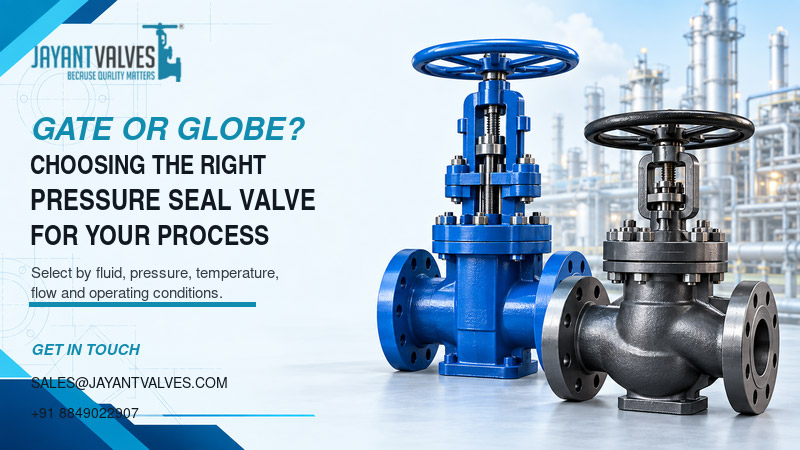
Selecting an industrial valve is not just about a pipeline size or a pressure rating. Fluid type, temperature, flow and operating conditions all matter when selecting a valve. In demanding high-pressure and high-temperature systems, the valve’s construction and sealing arrangement can make a difference to overall performance.
Pressure seal valves are designed for demanding services where pressure and temperature can be significant. Their pressure-sealing design uses internal line pressure to support effective sealing. However, selecting between a gate and globe valve still depends on what the valve needs to do in the system.
Before selecting a valve, it is important to understand its main purpose. Is it required mainly for shutting off the flow, or does the process need regular flow adjustment?
Gate valves are generally used for isolation. Their wedge moves away from the flow path when the valve is fully open, allowing fluid to pass through with relatively little obstruction. Globe valves have a different internal construction and are commonly selected when flow regulation is required.
Looking at the actual duty first makes valve selection more practical and avoids choosing a valve based only on its pressure class.
Pressure seal gate valves are commonly considered for demanding applications where dependable isolation is required. The pressure seal valve is designed so that increasing internal pressure contributes to the sealing force between the bonnet and body.
The pressure seal gate valve range features a flexible wedge design and can be supplied with gear, electrical and pneumatic operating options.
When selecting a Pressure Seal Gate Valve manufacturer, it is useful to consider manufacturing capabilities, inspection procedures, material options, applicable standards and available end connections. These details can have a direct impact on whether the valve suits the intended service.
Globe valves are designed differently because their internal arrangement allows the flow passage to be controlled through plug movement. This makes them suitable for applications where throttling or flow regulation is part of the process.
Pressure seal globe valves combine this operating principle with a pressure seal bonnet arrangement. A parabolic regulating plug/disc design supports controlled flow in demanding industrial applications.
For a Pressure Seal Globe Valve manufacturer, buyers should look at more than the valve's basic configuration. Testing practices, material selection, design standards and the ability to meet application-specific requirements are also worth checking.
These specifications should always be matched with the actual pressure, temperature, fluid and installation requirements.
The valve material also needs attention, particularly when the equipment will handle demanding process fluids or operate at elevated temperatures. Material selection can influence resistance to corrosion, temperature and mechanical stress.
Jayant Valves provides different material options, including carbon steel, alloy steel and stainless steel grades. The suitable grade depends on the service conditions and the valve component involved.
Rather than selecting a material only because it is commonly used, it is better to check its compatibility with the process fluid and operating environment.
There is no single valve that works best for every application. If the main requirement is isolation, a gate valve may be the more suitable option. If the process requires flow adjustment, a globe valve can be considered.
Other factors should also be reviewed, including pressure class, temperature, fluid characteristics, valve size, end connection, actuation and maintenance requirements. Considering all these points gives a more complete basis for selection.
A good valve selection also starts with clear process information. Sharing the operating conditions and service requirements with the manufacturer can help determine the appropriate design and configuration.
Choosing between a pressure seal gate valve and a globe valve depends mainly on the job the valve needs to perform. Gate valves are generally suited to isolation, while globe valves are better suited to applications involving flow regulation. Pressure, temperature, fluid characteristics, materials and technical standards should all be considered before making the final decision.
Looking for a pressure seal valve for your industrial application? Contact Jayant Valves to discuss your process requirements and suitable valve configuration.
Copyright © Jayant Valves
Powered by : #1 Vinayak InfoSoft - SEO Company Ahmedabad.