

 By Admin |
  April 15, 2026
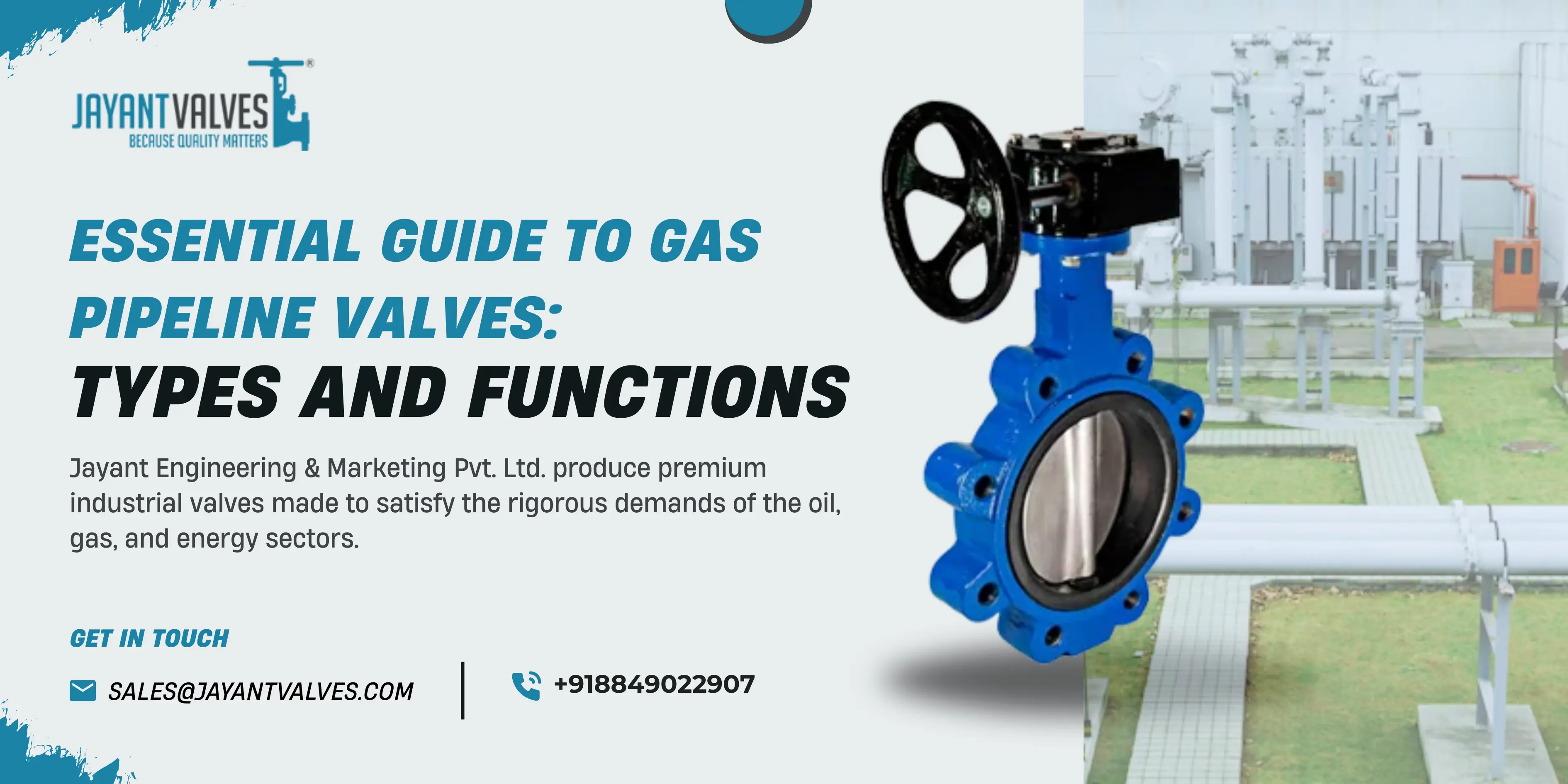
Essential components of the world energy infrastructure, gas pipes allow for the secure transfer of natural gas from manufacturing sites to businesses and homes. Specialized valves are positioned all along the pipeline system to guarantee safety, effectiveness, and good flow control. These valves help to manage pressure, manage gas flow, stop backflow, and guard the system from possible dangers.
Businesses like Jayant Engineering & Marketing Pvt. Ltd. produce premium industrial valves made to satisfy the rigorous demands of the oil, gas, and energy sectors. Knowing the many kinds of gas pipeline valves and their roles lets operators pick the correct option for dependable pipeline operation.
Valves are deliberately placed at compressor stations, distribution lines, and city gate stations in big gas distribution networks to guarantee safe and effective operations.
Depending on the operating circumstances and control needs of the pipeline, different valves serve various purposes.
Among the most often used valves in piping networks are gate valves. To either permit or halt the gas flow, they have a vertical gate that rises or falls.
Because they offer very low resistance when completely open, gate valves are frequently found in high-pressure gas transmission lines.
Ball valves regulate gas flow by means of a turning ball with a whole running through its middle. A right-angle opens or closes the valve entirely.
Ball valves are sometimes found in industrial gas systems and natural gas pipelines since they are tough and seals very well.
Instead of a simple shut-off, globe valves are made for accurate flow control.
Because of the change in flow direction within the valve body, globe valves produce more pressure drop than other valves.
A spinning disc positioned within the pipe defines butterfly valves. The disc either obstructs or permits gas to pass through as it turns.
Medium-pressure gas distribution systems where space and cost efficiency are crucial often employ these.
Automatic valves known as check valves are intended to stop back gas from moving throughout a pipe.
These valves guarantee that gas moves in just one direction, therefore increasing system dependability and security.
Safety valves safeguard pipes from dangerous pressure ranges.
Maintaining safety in gas transmission systems depends on these valves.
Gates and ball valves let operators to absolutely halt gas flow during maintenance or emergency shutdown.
Designed to meet world standards and perform dependably in challenging industrial settings, high-quality valves from companies like Jayant Engineering & Marketing Pvt. Ltd. are made. Gas pipe valves have widespread application in:
Gas pipeline valves are fundamental elements making sure to provide safe and efficient transportation of natural gas. From gate valves delivering trustworthy shut-off to verify valves preventing backflow and safety valves protecting against overpressure, each and every valve type has a specific purpose in pipeline operations.
Choosing the appropriate valve technology and a respectable maker promises improved system dependability, greater safety, and prolonged operating efficiency in gas pipeline networks.
Copyright © Jayant Valves
Powered by : #1 Vinayak InfoSoft - SEO Company Ahmedabad.